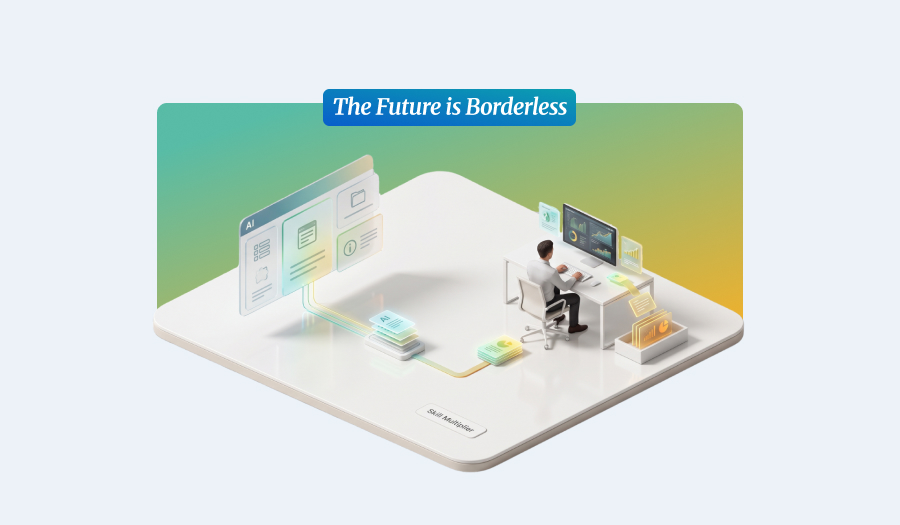
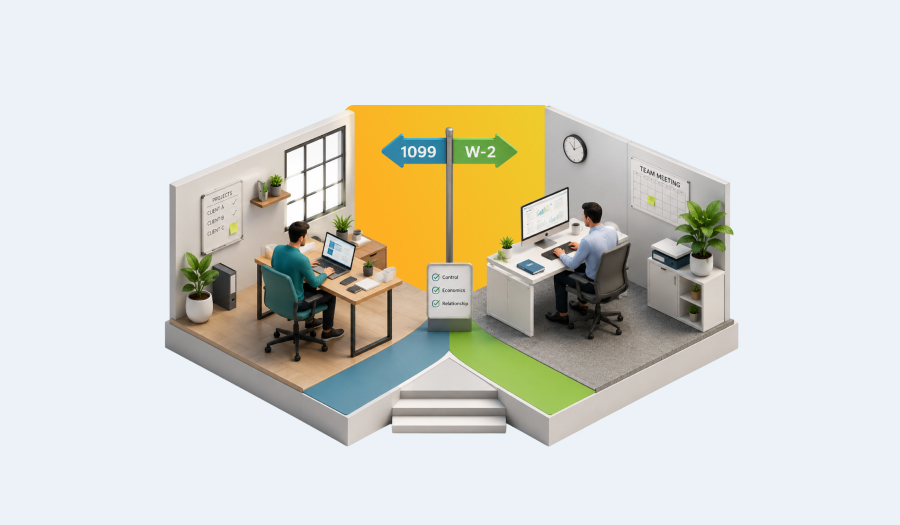
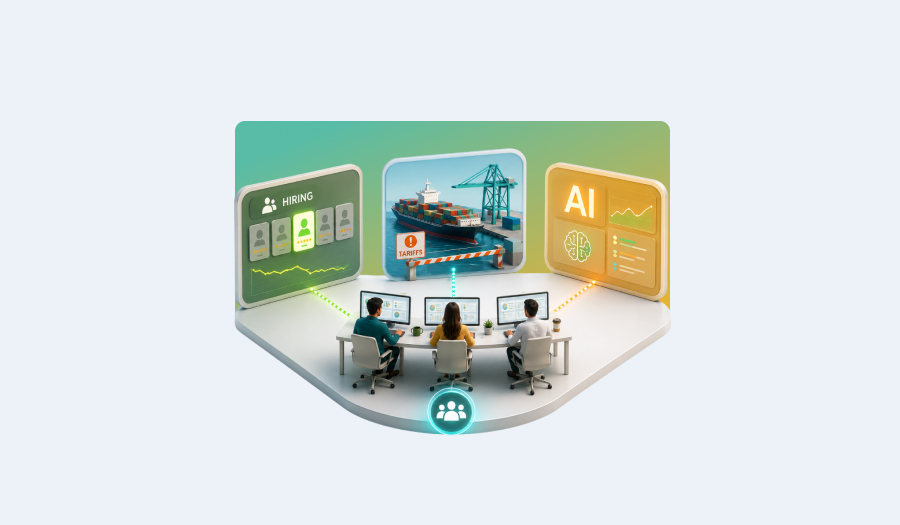
The New AI Workforce Architecture
.jpg)
Key Takeaways
- AI success now depends more on specialized talent and operational structure than software alone.
- New AI-focused roles such as Context Architects, AI QA Specialists, and Workflow Integration Engineers are emerging rapidly.
- Traditional local hiring pipelines often struggle to supply these specialized AI skills.
- Strategic labor offshoring helps companies build AI operations faster and more cost-effectively.
- Dedicated development teams create a low-risk environment for AI experimentation and scaling.
- Workflow compression allows businesses to dramatically reduce manual processes through AI-enabled operations.
The way businesses use AI has completely shifted.
Think back to how your office handled AI a year or two ago.
It was probably a bit like the Wild West. Everyone got a ChatGPT account, experimented with a few prompts, and used it to write emails a little bit faster.
But the "honeymoon phase" of AI is officially over.
Now, companies are realizing that to get real, time-saving results, you can’t just rely on your current team to fiddle with chatbots on the side. You actually need people whose entire job is making these tools work smoothly behind the scenes.
Brand-new, incredibly specific jobs are popping up overnight. Companies are hunting for people to design the exact data context an AI needs, specialists to audit the answers so the machine doesn't make things up, and tech-savvy builders who know exactly how to integrate AI into business workflows.
Here is the catch: because these jobs didn't even exist a few years ago, you can't just put an ad on a local job board and expect to find a perfect match.
That is why one of the biggest IT outsourcing trends right now isn’t about cutting costs on basic tech support. It’s about agility.
Smart businesses are looking globally to spin up a dedicated development team that focuses purely on AI operations. It allows companies to experiment with these strange new roles, figure out what works, and scale their processes without having to completely restructure their local office.
At the end of the day, winning the AI race isn't about buying the most expensive software. It’s about how fast you can find the right people to run it.
From Context Architects to AI QA: The New Faces of AI Automation Development
So, what do these new jobs actually look like?
They aren’t just "Software Engineer 2.0." The newest roles in tech are highly specialized, focusing entirely on the bridges between human intent, corporate data, and machine logic.
If you look at the teams that companies are building out today, three distinct roles keep popping up.
1. The Context Architect
You've probably heard of prompt engineering. This is the next evolution of that. A Context Architect doesn’t just write a clever prompt; they build the entire data environment that the AI lives in. They structure internal knowledge bases and organize company documentation so that when an AI model pulls information, it has the exact background knowledge it needs to give an accurate, business-aware answer.
2. The AI QA Specialist
AI is brilliant, but it’s notorious for confidently making things up. That’s where the AI Quality Assurance specialist comes in. This is a human-in-the-loop role dedicated entirely to monitoring, testing, and auditing AI outputs. They write the evaluation rubrics, run regression tests, flag when a model update breaks a previously working workflow, and ensure the AI's tone remains completely aligned with the brand.
3. The Workflow Integration Engineer
Think of these folks as the ultimate corporate glue. An AI tool is only useful if it talks to the rest of your software. Integration engineers focus on taking raw AI models and wiring them directly into your daily business tools—like your CRM, your communication channels, or your project management systems. Their sole metric of success is workflow compression: taking a multi-step administrative headache and automating it down to a single click.
Modern AI teams increasingly rely on specialized professionals who manage data context, evaluate AI outputs, and integrate AI tools into everyday business systems. These roles bridge the gap between human expertise and machine capabilities.
Why Scaling Your AI Operations Means Looking Past Local Job Boards
The Talent Pipeline Challenge
Let’s be honest: if you post a job opening tomorrow for a "Context Architect" or an "AI QA Specialist" on a local job board, you’re probably going to get a blank stare.
Or worse, you'll get a pile of resumes from people who just added "ChatGPT expert" to their bios last weekend.
Because these specific disciplines are so incredibly new, there is no legacy domestic pipeline. You can't just swipe through local resumes and find someone with five years of experience managing AI context layers.
The Cost of Hiring the Wrong Expertise
When companies realize they suddenly need these skills, their first instinct is often to panic-hire. They think they need to hire machine learning engineers with PhDs just to build a simple automation workflow or organize an internal company database.
But doing that is a bit like hiring a rocket scientist to fix your car's transmission.
It’s wildly expensive, the hiring process takes months, and a high-level engineer will probably get bored building basic prompt templates and quit in six months anyway. You don't need a data scientist to build a model from scratch; you need practical builders to learn how to integrate AI into business workflows.
Why Global Talent Is Filling the Gap
This massive talent mismatch is exactly why the sourcing playbook is shifting toward strategic labor offshoring. It is one of the most significant modern IT outsourcing trends driving the tech sector today.
Instead of waiting months to find a local specialist or paying an astronomical premium for overqualified engineering talent, smart businesses are turning overseas to handle the execution.
Global talent hubs have been much faster and more agile at upskilling a massive pool of sharp, tech-savvy professionals. These individuals are ready to become functional units of builders who know exactly how to manage data context, test for hallucinations, and maintain your AI infrastructure.
By spinning up an agile dedicated development team in an international tech hub, you bypass the frustrating local bidding wars entirely.
You can get an entire operational unit—complete with context builders, integration engineers, and QA monitors—up and running in a fraction of the time. It gives your business a low-risk environment to experiment with these new roles, see what moves the needle, and perfect your AI automation development without having to restructure your home office first.
Many AI-focused positions are too new for traditional hiring channels. Businesses increasingly turn to global talent pools to access practical AI implementation skills faster and more affordably.
Building an Agile AI Sandbox with a Dedicated Development Team
Why Internal Teams Struggle With AI Projects
When you decide to inject AI into your business, it can feel a bit like trying to repair an airplane while you’re mid-flight.
Your local team is already completely buried under their day-to-day responsibilities. They have deadlines to meet, clients to manage, and fires to put out. If you suddenly dump a massive new project on their desks—like building custom prompt libraries or mapping out data frameworks—one of two things will happen: either the AI project will stall, or their core work will suffer.
Creating a Dedicated AI Experimentation Environment
This is where a dedicated development team built through offshoring becomes a massive strategic advantage.
Think of this global team as an agile AI sandbox. By setting up a specialized unit overseas, you create a dedicated space focused purely on AI automation development and operational maintenance. They operate parallel to your local office, meaning they can build, test, and break things without interfering with the daily rhythm of your home office.
Scaling Without Organizational Disruption
Because an offshoring partner lets you scale this team up or down with incredible flexibility, it lowers the risk of experimentation. You don’t have to permanently restructure your domestic headcount or commit to massive local overhead just to see if a Context Architect or an AI QA specialist can move the needle for your business.
Instead, you get a focused, cost-effective global unit that builds the infrastructure in the background. Once they perfect the workflows, you can seamlessly roll those efficiencies out to the rest of your organization. It gives you all the power of cutting-edge AI operations, with none of the disruptive growing pains.
A dedicated offshore AI team gives businesses a controlled environment to experiment, test, and scale AI initiatives without disrupting existing operations. This approach reduces risk while accelerating AI adoption.
The Reality of Modern Workflow Compression
What Workflow Compression Really Means
So, what happens when you actually get these new roles working together in a global structure? You unlock something the tech world calls "workflow compression."
In plain English, it means taking a multi-step administrative headache that used to take your local team three days to complete, and shrinking it down to a single afternoon.
When people think about AI saving time, they usually picture an employee generating a quick document in thirty seconds. But real enterprise efficiency doesn't come from writing emails faster; it comes from continuous, automated business systems that run flawlessly behind the scenes.
The Power of Around-the-Clock Optimization
This is where the magic of a global team really shines. Because your offshore team operates in a different time zone, they can maintain, audit, and optimize your systems while your local office sleeps.
Imagine this daily cycle:
- Your local team logs off for the evening.
- Your offshore Workflow Integration Engineers spend their day connecting new AI tools directly into your CRM or project management software.
- Simultaneously, your offshore Context Architects update your internal databases so the AI is perfectly briefed on the latest market data.
Before your local team logs back on the next morning, your offshore AI QA Specialists have audited the outputs, cleared out any glitches, and verified that everything is running smoothly.
When your local team walks into the office at 9:00 AM, they aren't bogged down by data entry, system updates, or documentation lag. The heavy lifting is already done. By figuring out how to integrate AI into business workflows through a globally distributed team, you aren't just adopting new software—you are creating a 24/7 engine that constantly compresses your operational timelines.
Workflow compression is the process of dramatically reducing administrative effort through AI-enabled systems. When supported by specialized global teams, businesses can create continuous operational improvements that run around the clock.
Frequently Asked Questions
- Do I need to hire machine learning engineers just to use AI in my business? Honestly? Probably not. If you are building a brand-new AI model from scratch, yes, you need a data scientist. But if you are just trying to use existing tools (like ChatGPT or Claude) to automate your daily tasks, what you actually need are operational roles like Context Architects and Workflow Integration Engineers. Offshoring these roles lets you build a team of practical implementers without the massive price tag of a high-level engineer.
- What exactly is an AI-augmented offshore team? Think of it as a traditional remote team, but with a massive superpower. It’s an offshore team made up of professionals who are highly fluent in AI tools. Because they know how to use AI to handle routine tasks, they can complete data, tech, or admin work in a fraction of the time, giving you incredible efficiency for your budget.
- Why are companies looking at IT outsourcing trends for these new AI roles? Speed and flexibility. Because jobs like "AI QA Specialist" are so new, there isn't a steady stream of local applicants for them. Global talent hubs have been much faster at training professionals in these exact skills. Offshoring gives you a quick, low-risk way to spin up an AI operations unit without having to permanently restructure your local headcount.
- How do you actually integrate AI into business workflows using a remote team? It’s all about setting up a dedicated sandbox. Your offshore team handles the background setup—like updating your internal databases (context design) and connecting AI tools to your CRM (workflow integration). They do the heavy lifting and troubleshooting while your local team sleeps, so your business operations run smoothly around the clock.
- Is a dedicated development team overseas hard to manage when it comes to AI? It’s actually often easier than traditional tech support. Because AI inputs and outputs are entirely text-and-code-based, clear prompt libraries and standardized documentation act as a universal translator. When you partner with an experienced offshoring provider, they handle the infrastructure and HR, leaving you free to focus entirely on guiding the team's strategy.
The Future Belongs to the Structurally Agile
At the end of the day, the AI revolution isn't a software race. It’s a talent and structure race.
Two companies can buy the exact same enterprise AI tools tomorrow, but the company that wins will be the one that builds the right human infrastructure to support it.
The businesses that struggle will be the ones that try to force brand-new, fast-moving roles into rigid domestic hiring models. They will spend months searching local job boards, get priced out by astronomical bidding wars, or burn out their existing teams by asking them to manage complex AI frameworks on the side.
The companies that win are looking at the bigger picture. They realize that one of the most powerful IT outsourcing trends happening today isn’t about replacing humans with machines—it’s about using global talent to operationalize those machines.
By leveraging strategic labor offshoring, you give your business the ultimate competitive advantage: agility. You gain the freedom to build a dedicated, specialized AI operations unit, experiment with roles like Context Architects and AI QA Specialists, and continuously compress your workflows without the overhead or the risk.
The tools are already out there, and they are changing every single day. The only real question left is how fast you can scale the global team needed to run them.