Why Do Companies Outsource Work: A Practical Guide to Making It Work

Key Takeaways
- Outsourcing helps businesses reduce labor costs without sacrificing quality.
- Companies gain immediate access to specialized expertise that may not exist internally.
- External teams allow businesses to launch projects and scale much faster.
- Outsourcing frees internal employees to focus on strategic, high-value work.
- Choosing the right outsourcing partner is critical for long-term success.
- Starting with a small project minimizes risk and builds a stronger partnership.
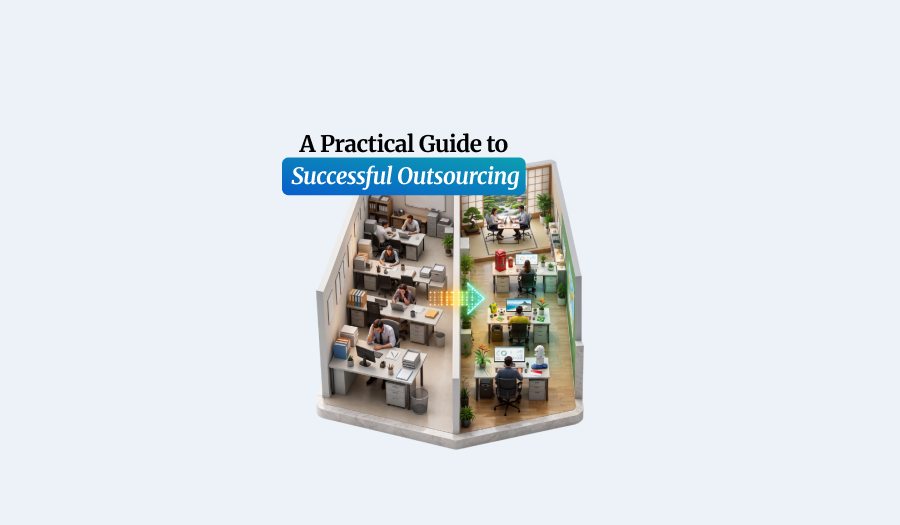
When your business is stretched thin, it's tempting to think you need to hire more people in-house. But the smartest companies realize that's not always the answer, so they outsource. Companies from startups to Fortune 500 firms are turning to outsourcing to solve real problems that internal teams can't fix. If you're on the fence about whether outsourcing makes sense for your company, this guide will show you exactly why so many businesses are doing it.
The Core Reasons Companies Outsource
Your team is probably good at what they do. But there's a difference between being good at something and being efficient at it. That's where outsourcing comes in.
Control Costs Without Cutting Quality
If we’re being honest, labor is probably the biggest expense. For most companies, salaries and benefits take up 50-70% of operational budgets. When you outsource work, you shift from fixed costs to variable costs, which means you only pay for what you need, when you need it.
Instead of having a payroll of full-time employees you maintain year-round, you use external teams when demand increases and scale back when it doesn't. This is especially powerful for seasonal businesses or companies with fluctuating workloads.
You get the skilled people you need without the overhead of benefits, taxes, office space, or equipment. Companies that outsource see labor cost reductions of 20-40% on average, that’s money you can reinvest in growth.
Access Skills You Don't Have Internally
Your team can't be experts at everything. Maybe you need someone who knows AI, or cloud architecture, or regulatory compliance in three different countries. Hiring for these roles is expensive, takes months, and then you're stuck with someone whose skills you may not need next year.
When you outsource, you get specialists who do this work every day. They've solved the problems your company is just starting to face. They understand the pitfalls because they've hit them before. This reduces your risk and accelerates your results.
Think about it this way, if you need a specialized skill for a one-time project, hiring someone permanently makes no sense. You'll pay for four years of employment when you need six months of work. Outsourcing lets you get exactly the skills you need for exactly as long as you need them.
Move Faster Than Your Competition
Speed wins in business. The company that launches first often owns the market. The problem is that building teams takes time. Finding talent, onboarding them, and getting them productive can take months.
Outsourcing compresses this timeline. A good outsourcing partner has people ready to go. They know your project requirements and they've worked on similar problems. They jump in and start producing value immediately. This is why startups especially rely on outsourcing. They can build products months faster than competitors who are still hiring.
Focus Your Team on What Matters Most
Not all work creates value. Your best people are probably doing routine tasks that keep them from their real job. Outsourcing frees up their time. By moving repetitive or specialized work to external teams, your internal people can focus on strategy, customer relationships, and innovation. This is where they create the most value. This is where your company actually differentiates itself.
Scale Without the Pain
Outsourcing gives you instant scalability. Whether you need to double your customer support team next or want to expand your development capacity while exploring a new market.
This flexibility lets you test new ideas without putting your entire company on the line. You can launch pilots, measure results, and scale what works. If it doesn't work, you simply adjust without layoffs or long-term commitments.
The Real Benefits Go Deeper
Beyond the obvious reasons, outsourcing delivers advantages that aren't always obvious at first.
- You get continuous improvement built in. Outsourcing partners make their money by being efficient. They invest in automation, process improvement, and training because better systems are their competitive advantage. Your internal team, even a good one, may not have the same pressure to constantly optimize.
- You reduce dependency risk. When only one person knows how to do something critical, you're depepndent and vulnerable. When an external team handles a function, multiple people understand the work, processes are documented, and continuity is protected.
- You gain access to technology and infrastructure. Good outsourcing partners invest heavily in tools, software, and systems. You get access to this infrastructure without buying it yourself. This is especially valuable for smaller companies that can't justify major technology investments.
- You tap into best practices. Because outsourcing partners work with multiple clients, they see what works and what doesn't across industries and companies. They bring this knowledge to your projects. You benefit from lessons learned by dozens of other companies.
What Companies Actually Outsource
The myth that companies only outsource low-value work, isn’t true. Today, companies outsource customer support, software development, IT infrastructure, accounting, HR administration, marketing, and even core product development.
Some outsource because they're startups without resources. Some outsource because they're mature companies focusing their resources on what makes them unique. The pattern is the same. They outsource anything that isn't central to their competitive advantage.
The Honest Challenges
Outsourcing isn't the ultimate solution for all of your problems. Communication across time zones can be frustrating, quality control requires attention, finding the right partner takes effort, etc. If you pick the wrong provider, you'll waste time and money.
However, these challenges are solvable. You manage them with clear contracts, defined expectations, regular check-ins, and choosing partners with proven track records. Companies that struggle with outsourcing almost always choose the wrong partner or have unclear requirements. Neither of those is a problem with outsourcing itself.
How to Know If Outsourcing Makes Sense for You
Ask yourself these questions:
- Do you have work that's not core to your competitive advantage? If yes, outsourcing makes sense.
- Is this work taking time away from higher-value activities? If yes, outsourcing is worth serious consideration.
- Do you lack specific skills internally? If yes, outsourcing gives you immediate access.
- Is your workload variable or cyclical? If yes, you're burning money on permanent staff during slow periods.
- Can you define the work clearly and measure results? If yes, you have a good foundation for outsourcing success.
If you answered yes to most of these, outsourcing deserves a place in your strategy.
Making Outsourcing Work
If you decide to outsource, remember this: it's a partnership, not a transaction. You're finding someone to extend your team.
- Start Small: Outsource one project or function, see how it goes, then expand if successful. This reduces risk and gives you time to establish good working relationships and processes.
- Be Clear About Expectations: Describe the work, timeline, quality standards, and success metrics. Don't assume your partner knows what you want, tell them explicitly.
- Communicate Regularly: Schedule weekly check-ins, use shared project management tools, and create transparency.
- Choose Partners Carefully: Look for experience with companies like yours, ask for references, and check their work.
FAQs
- What's the difference between outsourcing and offshoring? Outsourcing is just hiring an external company to do work. Offshoring specifically means you're hiring in another country. Most companies do both. You might outsource your IT to a local firm and offshore your customer support to a cheaper region. Pick based on what matters most to you.
- How much can we actually save by outsourcing? It depends. Offshore outsourcing typically saves 30 to 50 percent on labor costs, sometimes more. Onshore is cheaper than hiring internally but doesn't give you the same savings. The real question is what you're actually paying now. Do the math: add up your current salaries, benefits, equipment, and overhead for the work you're considering outsourcing. Compare that to an outsourcing proposal. That's your real savings number.
- What if the outsourcing company delivers poor-quality work? This is exactly why you can't just pick the cheapest option. Check references, request samples of their previous work, and understand their process. Start with one small project before going all-in. A solid partner will want to prove themselves because their reputation depends on it. If quality stays bad after 30-60 days, switch providers.
- Can we outsource customer-facing work? Yes, and many companies do. Customer support, live chat, and sales are commonly outsourced. The key is finding a partner who understands your brand and your customers. Your customers should barely notice they're talking to an external team. This requires training, clear guidelines, and quality monitoring. When done well, outsourced customer support actually improves because the partner is focused on customer experience as their primary business.
- How do we know if outsourcing will actually save us time? Time savings come from two places. First, you free up your team to focus on higher-value work. Second, the external partner is often more efficient because that's their business. Measure your time investment in the work you're considering outsourcing. Then compare it to the time you'll spend managing the outsourcing relationship. For most companies, the outsourcing partner becomes more efficient within 60 days. After that, you gain time.