




Our Process
01
Discovery & Planning
This phase defines goals and audience, aligns expectations, gathers requirements, and builds the site map and project plan with clear deliverables.
04
Testing & Quality Assurance (QA)Design & Prototyping
This phase tests functionality, device and browser compatibility, performance, and security to ensure the website runs safely, efficiently, and consistently everywhere.
02
Design & Prototyping
This phase develops wireframes, design concepts, and user flows, incorporating feedback through iterations and building prototypes to confirm visual direction and functionality.
05
Testing & Quality
Assurance (QA)
This phase launches the website, performing final checks, configuring DNS and server settings, and making the site publicly accessible.
03
Development
This phase transforms approved designs into a functional site, integrating CMS, completing front/back-end development, and ensuring fully responsive performance across devices.
Note
Include Micro-service architecture, devops, detailed walkthrough on UX/UI, AI integration as scope & capabilities $45 per hour
Our Services

Web Design & Development for Seamless User Experience and Maximum Engagement on your website

Ecommerce Website Development Boost Your Website’s Visibility and Drive More Traffic with Our SEO Services

Redesign Existing Website & Website Maintenance Support Revamp Your Website for Modern Design and Ongoing Performance

Search Engine Optimization (SEO) Building Secure and Scalable E-Commerce Websites for Your Online Store
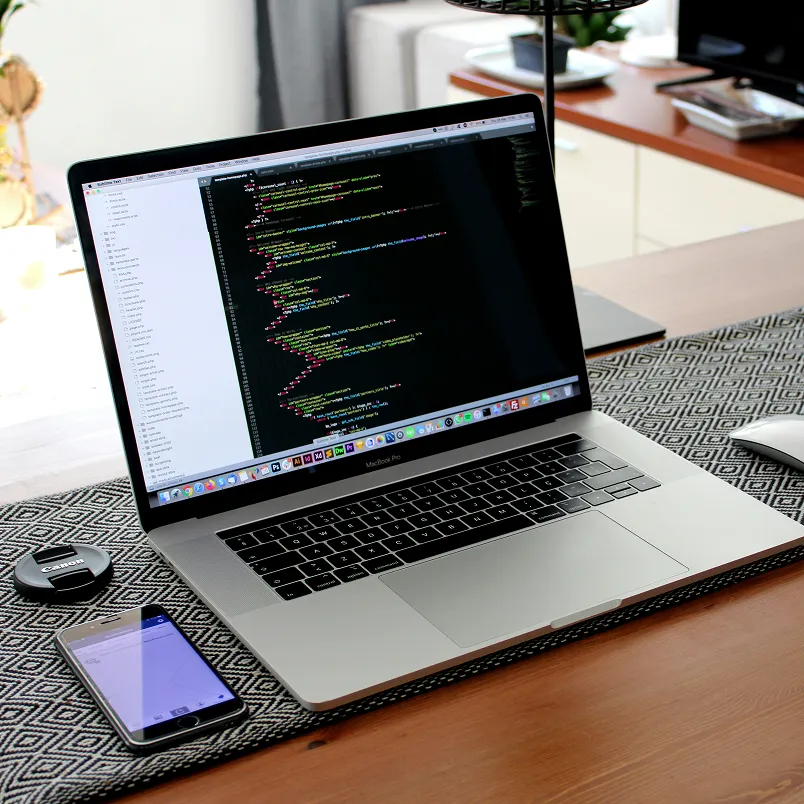
Languages and platforms
Laravel
A modern PHP framework used to build secure, scalable web applications with clean code and built-in features like authentication, routing, and APIs.
Angular
A front-end JavaScript framework by Google that helps create dynamic, single-page applications with powerful data binding and reusable components.
Node.js
A JavaScript runtime environment that allows developers to build fast, scalable server-side applications using non-blocking, event-driven architecture.
Python
A versatile programming language known for its simplicity and wide use in web development, automation, data analysis, machine learning, and AI.
MySQL
An open-source relational database management system used for storing and managing structured data in web and enterprise applications.

WordPress
A popular open-source content management system (CMS) for creating websites and blogs, offering thousands of themes and plugins for customization.

Magento
An eCommerce platform built on PHP, designed for businesses to create flexible, feature-rich online stores with advanced product and order management.

Wix
A beginner-friendly website builder with drag-and-drop tools that lets users create professional websites without coding knowledge.

Shopify
A leading eCommerce platform that enables businesses to create and manage online stores with built-in payment processing and marketing tools.

Squarespace
A design-focused website builder offering elegant templates and easy customization, ideal for portfolios, small businesses, and creative websites.
ABROADWORKS IS TRUSTED BY HUNDREDS OF COMPANIES FROM STARTUPS TO ENTERPRISE BUSINESSES



Asked and Answered: Virtual Assistant FAQs
What is the difference between your Web Design and Web Development services?
Web Design focuses on the user experience (UX) and user interface (UI). This includes the aesthetic look, feel, layout, and visual flow of the website, which are defined during the Design & Prototyping phase using mockups and user flow planning.
Web Development is the coding and programming (front-end and back-end) that turns those designs into a fully functional website, including CMS integration and responsive design implementation. We offer a seamless, integrated service covering both.
Web Development is the coding and programming (front-end and back-end) that turns those designs into a fully functional website, including CMS integration and responsive design implementation. We offer a seamless, integrated service covering both.
Can you help with an existing website redesign or just a new build? (SEO Focus: Website Redesign)
Yes, we specialize in both. Our Redesign Website service involves revamping your site for modern design, improved user experience, and ongoing performance. This typically follows the same Discovery & Planning and Design & Prototyping process to ensure the new site meets current standards while preserving your existing SEO value.
What is your typical Project Life Cycle for a website development or redesign?
Our process is divided into five transparent, structured phases to ensure precision and quality:
Discovery & Planning: Kickoff meeting, requirements gathering, and site mapping to create an initial project plan.
Design & Prototyping: Creating design mockups, planning user flow, and prototyping interactive elements.
Development: Front-end and back-end coding, CMS integration, and responsive design.
Testing & QA: Functional testing, security audits, and browser/device compatibility checks.
Launch: Final checks, server setup, DNS configuration, and site launch.
Discovery & Planning: Kickoff meeting, requirements gathering, and site mapping to create an initial project plan.
Design & Prototyping: Creating design mockups, planning user flow, and prototyping interactive elements.
Development: Front-end and back-end coding, CMS integration, and responsive design.
Testing & QA: Functional testing, security audits, and browser/device compatibility checks.
Launch: Final checks, server setup, DNS configuration, and site launch.
Will I be able to edit the website content myself after it launches?
Yes. In most cases, we utilize a familiar Content Management System (CMS) integration (like WordPress or Shopify) that allows you to easily manage and update your website's text, images, and basic structure without needing to write code.
How can I get a detailed quote for my specific project?
You can get started by filling out a brief form to Book a Discovery Call. The form asks for key details like what you want to build, why it’s important for your business, and your budget range. This initial non-technical information helps us prepare a tailored agenda so we can use our time efficiently during your Discovery Call to discuss strategy and fit.
Do you offer Search Engine Optimization (SEO) services to help my new website rank?
Yes, we provide dedicated Search Engine Optimization (SEO) services. This service can be integrated during development or after launch to boost your website's visibility, drive more organic traffic, and ensure the site is optimized for success.
How involved will my team and I be in the Design & Prototyping phase?
Your involvement is essential during the Design & Prototyping phase.
This highly collaborative stage begins with establishing the foundational brand direction—either leveraging your existing guidelines or crafting a custom identity designed specifically for your business. We then proceed to create detailed design mockups and comprehensive user flow and experience plans. We have our pool of graphic designers and UX/UI specialists who are capable to help.
You maintain full control for customization and tweaking every element, and we actively seek your feedback and revisions. This is an iterative process: nothing moves forward to the development phase until we have your explicit sign-off on the final approved design, guaranteeing it aligns perfectly with your vision and business goals.
This highly collaborative stage begins with establishing the foundational brand direction—either leveraging your existing guidelines or crafting a custom identity designed specifically for your business. We then proceed to create detailed design mockups and comprehensive user flow and experience plans. We have our pool of graphic designers and UX/UI specialists who are capable to help.
You maintain full control for customization and tweaking every element, and we actively seek your feedback and revisions. This is an iterative process: nothing moves forward to the development phase until we have your explicit sign-off on the final approved design, guaranteeing it aligns perfectly with your vision and business goals.
Who is responsible for writing the website content (copy) and sourcing images?
During the Discovery & Planning phase, we define who handles content. While we focus on Content Management System (CMS) integration and ensuring the architecture supports your content, we typically rely on the client to provide the final copy and high-resolution images. If needed, we can integrate a professional copywriter or image sourcing into the scope for an additional service fee.
How do you ensure the final website is optimized for speed and performance?
We prioritize speed at every stage. During the Development phase, we focus on clean, efficient code using languages like Laravel, Angular, and Node.js. During Testing & QA, we conduct a specific Performance optimization check. A fast website is crucial for both SEO and user retention.
What is a CMS (Content Management System), and which one is right for my project?
A CMS (like WordPress, Shopify, or Magento) is the administrative software used to manage and publish your website content without needing to code.
WordPress is often best for standard business sites and blogs.
Shopify and Magento are specialized for large-scale e-commerce.
We will recommend the platform that best aligns with your long-term content, sales, and scaling needs during the initial requirement gathering.
WordPress is often best for standard business sites and blogs.
Shopify and Magento are specialized for large-scale e-commerce.
We will recommend the platform that best aligns with your long-term content, sales, and scaling needs during the initial requirement gathering.
What are the typical ongoing or running maintenance costs associated with a professional website?
The ongoing costs of a modern website are typically separate from our development fee and fall into three main categories: 1) Hosting (server space, which varies based on traffic volume); 2) Domain Registration (an annual fee for your URL); and 3) Software Licensing (annual or monthly fees for premium themes, plugins, or paid subscriptions like email marketing tools or specialized security features). We provide a detailed estimate of these third-party costs during the Launch phase.
If we want to add a new page or feature after launch, what is the process?
For any new functionality or scope change—such as adding a blog, a calculator tool, or a new page layout—we follow a transparent process: 1) You provide a request outlining the needed feature; 2) We conduct a quick assessment and provide a detailed work estimate (including hours and cost); 3) Only upon your formal approval of the estimate do we schedule and begin the work. This ensures you always know the cost upfront.
How does your website development process inherently optimize for Search Engine Optimization (SEO)?
Our development process includes crucial SEO steps from the very beginning, ensuring your site is built for high visibility, not just good looks. Key steps include:
Technical SEO Foundation: During the Development phase, we build clean, semantic HTML and implement Responsive Design for Google's mobile-first indexing.
Site Architecture: We create a logical Site Mapping plan during Discovery & Planning, which dictates clear URL structures and internal linking to help search engine crawlers.
Speed & Performance: We prioritize Performance optimization during the Testing & QA phase, as site speed is a critical ranking factor.
Schema Integration: We configure the platform (WordPress, Shopify, etc.) to easily implement structured data (schema markup) to earn rich snippets in search results.
Technical SEO Foundation: During the Development phase, we build clean, semantic HTML and implement Responsive Design for Google's mobile-first indexing.
Site Architecture: We create a logical Site Mapping plan during Discovery & Planning, which dictates clear URL structures and internal linking to help search engine crawlers.
Speed & Performance: We prioritize Performance optimization during the Testing & QA phase, as site speed is a critical ranking factor.
Schema Integration: We configure the platform (WordPress, Shopify, etc.) to easily implement structured data (schema markup) to earn rich snippets in search results.
Can you integrate advanced SEO elements like server-side rendering (SSR) or dynamic rendering?
Yes. For large, complex applications and websites utilizing modern frameworks like Angular or Node.js, we can implement advanced rendering techniques. This ensures that even complex JavaScript-heavy pages are easily accessible, crawled, and indexed by search engines, which is vital for high-performance Technical SEO.
If we choose to redesign our existing website, how do you prevent losing our current SEO rankings?
This is one of the most critical steps in a Redesign Existing Website project. We ensure ranking preservation through two primary methods:
Comprehensive 301 Redirect Mapping: We meticulously document every old URL and implement permanent 301 redirects to the corresponding new pages, preserving all accumulated link equity ("link juice").
Content Parity Check: We verify that all high-ranking content from the old site is transferred and optimized on the new site before the Site launch.
Comprehensive 301 Redirect Mapping: We meticulously document every old URL and implement permanent 301 redirects to the corresponding new pages, preserving all accumulated link equity ("link juice").
Content Parity Check: We verify that all high-ranking content from the old site is transferred and optimized on the new site before the Site launch.
How do we ensure long-term SEO success after the site launches?
Long-term success relies on consistency. We recommend continued Website Maintenance Support to ensure the site remains fast and secure. Additionally, we encourage a sustained Content Strategy—using the integrated CMS to regularly add high-quality, keyword-targeted content to maintain and grow Topical Authority in your niche.
What specific platforms and programming languages do you use?
We build secure, high-performance websites using a diverse stack of technologies.
Programming Languages include Laravel, Angular, Node.js, Python, and MySQL.
Platforms and CMS (Content Management Systems) we specialize in include WordPress, Shopify, Magento, Wix, and Squarespace.
We select the best technology to align with your business goals and long-term scalability.
Programming Languages include Laravel, Angular, Node.js, Python, and MySQL.
Platforms and CMS (Content Management Systems) we specialize in include WordPress, Shopify, Magento, Wix, and Squarespace.
We select the best technology to align with your business goals and long-term scalability.
Do you offer services for e-commerce stores? (SEO Focus: Ecommerce Website Development)
Absolutely! We specialize in building secure and scalable e-commerce websites. This involves setting up secure payment gateways, inventory management, product pages, and checkout flows on platforms like Shopify and Magento to maximize online sales and growth.
How do you ensure the website will look good on all devices (mobile, tablet, desktop)?
We implement Responsive Design during the development phase. This is a core part of our process, ensuring the site functions seamlessly across all browsers and devices. This is crucial for both user experience and search engine ranking.
What happens during the Testing and Quality Assurance (QA) phase?
The QA phase is critical for delivery and involves rigorous checks:
Functional Testing: Testing all links, forms, and features.
Browser & Device Checks: Ensuring perfect compatibility across major browsers and screen sizes.
Performance Optimization: Tuning the site for speed and efficiency.
Security Audits: Checking for vulnerabilities before the site goes live.
Functional Testing: Testing all links, forms, and features.
Browser & Device Checks: Ensuring perfect compatibility across major browsers and screen sizes.
Performance Optimization: Tuning the site for speed and efficiency.
Security Audits: Checking for vulnerabilities before the site goes live.
What happens during the Testing and Quality Assurance (QA) phase?
The duration depends heavily on the project complexity (e.g., simple landing page vs. complex e-commerce platform). After the Discovery & Planning phase, we provide a Desired Launch Date to give you a clear target. We manage the project to meet agreed-upon timelines, using our structured process to deliver efficiently.
What is the next step after the Discovery Call?
After our Discovery Call, we consolidate everything discussed into a single document to ensure we have all requirements down in writing. Based on these specifics, we provide you with a ballpark estimate for the project.
Once we reach an agreement on the scope and estimate, the next step is the creation of the detailed Software Requirement Specification (SRS). This document acts as our official blueprint. From that point forward, we transition into the build phase, where we work closely with you through continuous feedback and collaboration until your new website or web application is complete.
Once we reach an agreement on the scope and estimate, the next step is the creation of the detailed Software Requirement Specification (SRS). This document acts as our official blueprint. From that point forward, we transition into the build phase, where we work closely with you through continuous feedback and collaboration until your new website or web application is complete.
What is the difference between UI and UX, and how do you optimize for both?
UX (User Experience) focuses on how the website feels and functions—is it easy to navigate, logical, and efficient? We optimize UX through site mapping, user flow planning, and defining clear calls to action.
UI (User Interface) focuses on how the site looks—the visual elements, typography, and aesthetics. We optimize UI through professional design mockups. Our goal is a site that looks stunning and works perfectly.
UI (User Interface) focuses on how the site looks—the visual elements, typography, and aesthetics. We optimize UI through professional design mockups. Our goal is a site that looks stunning and works perfectly.
Can you integrate special features like AI or Micro-service architecture into the website?
Yes, our capabilities include advanced integrations. We can include specialized scope elements like AI integration and designing systems using Micro-service architecture. Please note these advanced features require detailed planning during the Discovery & Planning phase and will be reflected in the project's complexity and timeline.
What specific security measures are included in the website build?
Security is non-negotiable, particularly for Ecommerce Website Development. Our Testing & Quality Assurance phase includes dedicated Security audits. We ensure the use of secure coding practices, implement HTTPS/SSL, and configure the server setup correctly upon launch to protect against common vulnerabilities.
What kind of support do you offer after the site launch? (SEO Focus: Website Maintenance Support)
After the Site launch, we transition into ongoing support. We offer comprehensive Website Maintenance Support options. This typically includes monitoring performance, applying security patches, handling necessary software updates (CMS and plugins), and providing assistance with basic content changes. This ensures your site maintains modern design and Ongoing Performance.
Do you host the websites you build, or should I find my own host?
We focus on the design and development, but we manage the technical preparation for hosting, including Server setup and DNS configuration. We can recommend trusted hosting providers based on your website's expected traffic and scale, and we will work directly with your chosen host to ensure a seamless launch.
What is your support structure if we need immediate help or require small updates?
Our support structure is flexible and designed for rapid response. For small changes, bug fixes, or immediate support needs, we provide assistance on a time-and-materials basis. This ensures you only pay for the exact time and expertise you use, providing an efficient and cost-effective way to manage ongoing site health and minor content adjustments.
How does the Project Management team ensure our project stays on budget?
Our project managers provide meticulous oversight based on the initial ballpark estimate provided after your Discovery Call. It is important to note that all work is billed strictly by the hour, and the initial estimate serves as a helpful guide but is not guaranteed.
To maintain control over your budget and timeline, we maintain meticulous control over the Scope defined in our initial plan. Any request for changes or additional features must be formally reviewed and approved before development begins to prevent scope creep and ensure complete transparency in how your budget is managed.
To maintain control over your budget and timeline, we maintain meticulous control over the Scope defined in our initial plan. Any request for changes or additional features must be formally reviewed and approved before development begins to prevent scope creep and ensure complete transparency in how your budget is managed.
How do you handle keyword research and integration during the content phase?
While we primarily rely on the client for final copy, our process ensures the site structure is ready for optimal keyword targeting:
We use the Requirement gathering phase to understand your business's high-value keywords.
We structure the site (headers, subheadings, meta descriptions) to align with long-tail keywords.
We ensure the CMS integration is user-friendly for future content updates, allowing your team to easily target new keywords over time.
We use the Requirement gathering phase to understand your business's high-value keywords.
We structure the site (headers, subheadings, meta descriptions) to align with long-tail keywords.
We ensure the CMS integration is user-friendly for future content updates, allowing your team to easily target new keywords over time.
What are "Core Web Vitals," and how do you ensure our new site meets them?
Core Web Vitals are a set of specific metrics defined by Google that measure user experience. They include LCP (Largest Contentful Paint, measuring loading speed), FID (First Input Delay, measuring interactivity), and CLS (Cumulative Layout Shift, measuring visual stability). We ensure compliance by:
Focusing on Performance optimization to achieve fast loading speeds (LCP).
Using efficient code (Node.js, Angular) to ensure quick interactivity (FID).
Rigorous layout testing during Testing & QA to prevent visual shifts (CLS).
Focusing on Performance optimization to achieve fast loading speeds (LCP).
Using efficient code (Node.js, Angular) to ensure quick interactivity (FID).
Rigorous layout testing during Testing & QA to prevent visual shifts (CLS).
Is your SEO service included in the website build, or is it a separate service?
Our website build inherently includes the necessary Technical SEO foundation (speed, responsiveness, structure). However, dedicated Search Engine Optimization (SEO) (including in-depth keyword research, competitor analysis, and link-building strategy) is offered as a separate, specialized service. This allows clients to choose the level of ongoing support they need to Boost Your Website's Visibility and Drive More Traffic.