The Offshore Solution to the AI Revolution: Bridging the AI Skill Gap

Key Takeaways:
- AI tools are only as effective as the people managing and optimizing them
- Skill gaps remain the biggest barrier to AI adoption
- Offshore talent provides access to experienced AI specialists at lower costs
- LLMs require structured workflows, not just casual usage
- Visual AI and automation are reshaping creative production at scale
- Offshore developers enable full AI integration, not just surface-level usage
It’s tempting to believe that offshore labor has become irrelevant with the rise of AI tools, but AI isn’t a magic bullet, and it certainly isn’t a bullet that can figure itself out. No matter the system, AI’s power depends on skilled users, architects, and engineers.
Despite its potential, in 2025, 63% of employers identified skill gaps as the top barrier to adopting AI.
As businesses scramble to fill the widening AI skills gap, labor offshoring offers a powerful third option, with potential hires having honed their skills with AI for years.
Whether a business needs someone to run AI tools or an engineer to build them, offshore labor can provide vital expertise at a lower cost than domestic competitors.
The best solution to the AI revolution today is offshore labor.
The AI Revolution: Beyond the Mainstream LLM Boom
The Breakthrough Moment of LLM Adoption
LLMs hit the mainstream in 2022 with ChatGPT’s release, kicking off a modern boom. Within days, users moved from viral curiosity to utilizing the system for everything from Python code to business plans. It was the moment chatbots evolved from simple toys into actual, workable tools for the professional world.
Expansion Into Visual Creativity
The revolution quickly expanded into the visual arts. With the arrival of DALL-E 2 and Midjourney, painstaking digital sketching was replaced by descriptive prompts that yielded polished illustrations in seconds. For many creatives, this was the first time AI proved it could produce truly professional-looking imagery.
The Ongoing Evolution of AI Tools
The revolution is far from over, though. New tools are being built daily, and each one pushes the boundaries of what can be automated.
But the simple truth is that AI isn’t a magic bullet, and it certainly isn’t a bullet that can figure it out. Whether it's prompting AI or developing it, someone needs to be in the loop, and finding someone with the necessary expertise can be a serious challenge in today’s market.
AI has evolved rapidly from novelty tools into essential business systems, but its effectiveness still depends heavily on skilled human expertise.
LLM Implementation: The Friction Between Hype and Utility
While LLMs like ChatGPT, Claude, and Gemini are the most accessible entry points into AI, they are also where most businesses stumble. Organizations often assume that a subscription is enough to revolutionize their workflow, but professional-grade output requires more than a simple chat interface.
The challenge isn’t just getting the AI to talk; it’s getting it to follow instructions, maintain brand logic, and integrate into a repeatable business process. Without specialized operators, most LLM initiatives stall long before they get off the ground.
Beyond the Chatbox: The Challenge of Prompt Logic
Most employees use LLMs for one-off tasks, but true implementation requires building complex, multi-step prompt chains. If a prompt is engineered for consistency, the model will produce different results each and every time it’s used.
This “variability” is the enemy of scale. Businesses need dedicated specialists who can build “System Prompts” that force the LLM to stay on task, follow specific formatting rules, and ignore irrelevant data.
The Labor of Verification: Human-in-the-Loop
The greatest challenge with LLMs is their tendency to present false information with absolute confidence. This makes them dangerous to use in customer-facing roles or data-heavy departments without a strict review process.
LLM output should never be treated as a final product. It is a high-speed drafting tool that requires a human in the loop to:
- Fact-check technical or proprietary information.
- Audit for bias or tone shifts that could damage brand reputation.
- Refine formatting to ensure the data is actually usable by other departments.
Scaling the Noise: Managing High-Volume Text
LLMs allow a business to generate thousands of emails, reports, or product descriptions in minutes. However, this creates a secondary challenge: a massive increase in the volume of content that must be organized and distributed.
Without a dedicated AI operator, the “time saved” by an LLM is often lost to the manual labor of sorting through thousands of drafts. To scale without friction, you need a workflow that filters out the noise and identifies the best versions for publication.
To get the most out of LLMs, you need the best operators, which are neither easy to find nor cheap.
The Visual Frontiers: AI-Driven Design and Motion Graphics
The AI revolution isn’t just text-based; it is fundamentally transforming how brands look and move. Visual prompters – digital designers and artists who specialize in AI – are now producing high-end graphics, brand assets, and videos at speeds that were previously impossible.
By 2026, generative AI is expected to influence or create over 60% of all social media content for businesses. This shift has turned the traditional design process on its head, moving from manual sketching to “Visual Prompt Engineering.”
Offshore visual specialists are leading this charge. They aren’t just clicking a button; they’re orchestrating complex workflows to create thousands of assets for all manner of brands.
High-End Brand Assets and Digital Artistry
Modern visual prompters use tools like Midjourney, DALL-E 3, and Adobe Firefly to build the perfect brand imagery.
Digital artists often use “image-to-image” referencing and custom style tuning to ensure every output matches a company’s specific aesthetic.
In the past, a full brand refresh could take months of manual labor. Today, an offshore AI artist can generate a library of custom visuals in just a week, slashing production costs by roughly 80%.
The New Era of AI Video and Motion
Video production was once the most expensive item in a marketing budget. Now, specialists are using video-generation models like Sora Runway and Veo to turn text scripts into promotional clips.
These motion specialists act as “Creative Directors for AI.” They manage the frame-by-frame consistency and audio generation, allowing a small business to produce videos that used to require an entire film crew.
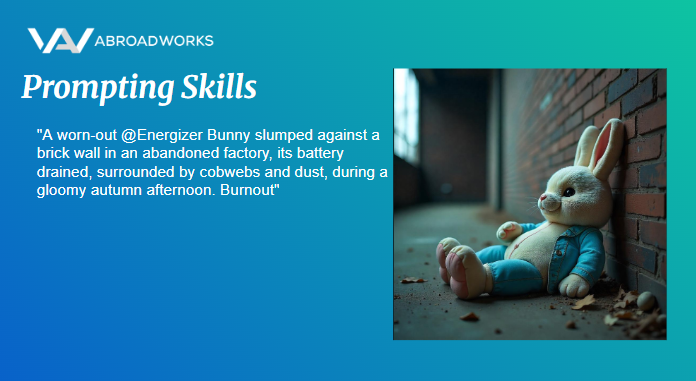
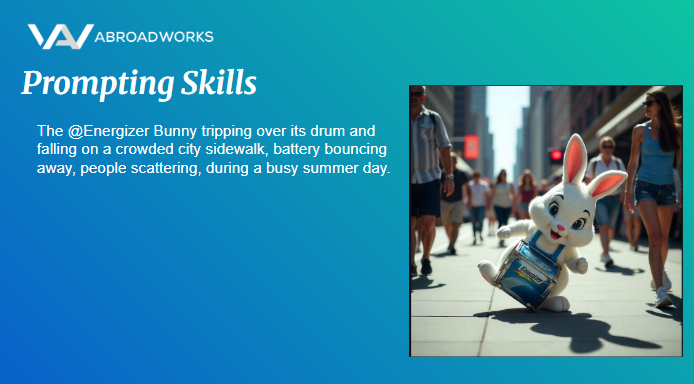
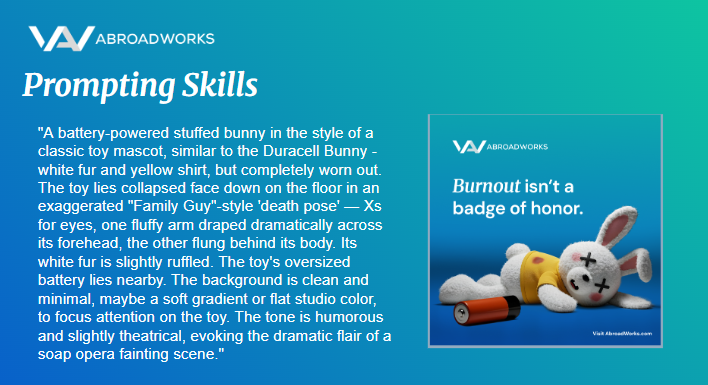
But these aren’t easy roles to fill. An AI artist requires talent and skill to get the best results, just like any other artist. Even the most basic of image requests can go haywire.
Beyond Prompting: The Offshore Advantage in AI Development
While many businesses struggle simply to use AI, others are looking to build with it. The demand for developers who can train models, integrate APIs, and build custom internal AI agents is skyrocketing.
Offshore talent isn't limited to "operators." There is a massive pool of specialized developers who can fine-tune LLMs on proprietary data and build RAG (Retrieval-Augmented Generation) systems for internal knowledge bases.
These experts maintain your AI infrastructure at a fraction of the cost of a Silicon Valley engineering team. They turn AI from a "cool tool" into a permanent part of your company's architecture.
The Architects: Building the AI Backbone
MLOps & Infrastructure Engineers
Scaling AI requires more than just a clever prompt; it requires a secure "factory" to run it. MLOps engineers build the pipelines for developing, training, and deploying models.
With domestic salaries ranging from $130k to $190k, these roles are a heavy lift for most budgets. Filling these gaps with offshore talent often costs just 20% as much as domestic counterparts, providing elite infrastructure without the domestic price tag.
Data Engineers (AI/ML Focus)
AI is only as good as the data feeding it. Data Engineers are the unsung heroes who build the foundational pipelines that ensure models receive clean, high-quality information.
With a projected growth rate of up to 34%, competition for these "pipeline builders" is fierce. Hiring offshore allows you to secure this foundational talent and ensure your AI projects don't starve for quality data.
The Navigators: Strategy, Ethics, and Output
AI Product Managers & Prompt Engineers
By 2026, over 76% of product leaders expect to expand their AI investment. This has created an explosion in demand for managers who can translate AI capabilities into scalable, user-ready products.
Prompt Engineering has also evolved into a vital technical discipline. Whether you need an architect for your AI strategy or a specialist to refine human-model interaction, the offshore market is the fastest way to scale.
Data Governance & AI Ethics Officers
As regulations tighten, 39% of workers' core skills are expected to shift toward governance and ethics by 2030. This is a brand-new role category driven by global regulatory demand and risk management.
Because these roles are emerging, there is less competition in the offshore market than in the US. Hiring offshore allows you to bake compliance and ethics into your AI development from day one at a significantly lower cost.
Offshore talent extends beyond AI usage into full-scale development, enabling businesses to build, deploy, and maintain custom AI systems cost-effectively.
The 2026 AI Talent Gap: Finding Global Diamonds in the Rough
With the explosion of new roles comes a massive skill gap that domestic markets simply cannot fill. While AI skills are now a near-necessity in the modern workforce, few individuals or institutions are able to meet the demand.
Finding a domestic hire with AI experience – and at a reasonable rate – is like finding a needle in a haystack. This is especially true for AI development, where the shortage of specialized engineers is at an all-time high.
The Academic Lag: Why AI is a Self-Taught Game
AI is currently seen as the bane of many official learning institutions. Few teachers or professors see it as a legitimate skill to teach, leaving students to fend for themselves. Because formal programs haven’t caught up, AI remains a self-taught discipline.
For naysayers, AI is the arena of “obsessive autodidacts” – but for businesses, these self-taught experts are invaluable. Whether they are building MLOps pipelines or refining LLM prompts, these workers have gained their expertise through real-world experience, not a classroom.
Multiple reports have shown the reality of this 2026 talent crisis:
- AI talent demand is rising sharply across every sector.
- Hiring qualified AI professionals is significantly harder than filling traditional tech roles.
- Domestic premiums are skyrocketing, as companies pay more for AI skills even outside of traditional tech jobs.
The Strategic Pivot: Accessing the Global Talent Pool
The domestic skill gap is wide, and the workload is only growing. Businesses are often forced to either abandon AI opportunities or pay a massive premium for rare domestic talent. Offshore labor offers a superior third option.
While U.S. institutions lag behind, offshore workers are recognizing these skills as the future.
Many are specializing in AI optimization and development as their primary career path, creating a massive, specialized talent pool that doesn’t exist domestically.
In a traditional 2022-era marketing department, a small business would need four distinct roles to maintain an online presence:
- A Copywriter: To write blogs and emails ($50k - $70k/year)
- A Graphic Designer: To make social media posts and ads ($50k - $65k/year)
- A Social Media Manager: To schedule, post, and engage ($45k - $60k/year)
- An SEO Specialist: To research keywords and optimize content ($55k - $75k/year)
Such a team could cost a business upwards of $250k/year. The new reality is that one specialized offshore AI expert can fill that entire role for roughly $50k/year – replacing the SEO/Writer with LLMs Claude or ChatGPT, the Designer with text-to-image generators like Midjourney or Canva AI, and the Social Manager with AI agents like Zapier or Make.com.
The global AI talent shortage is widening, making offshore hiring one of the most effective ways to access skilled, cost-efficient professionals.
Frequently Asked Questions
- Why can’t businesses rely on AI tools alone? AI tools require structured inputs, validation, and integration into workflows. Without skilled operators, outputs are inconsistent and unreliable.
- What roles are most in demand for AI offshore hiring? Prompt engineers, AI developers, data engineers, MLOps specialists, and AI product managers are among the most sought-after roles.
- Is offshore AI talent as skilled as domestic talent? Yes. Many offshore professionals specialize in AI full-time and gain hands-on experience faster due to high global demand.
- How much can businesses save by hiring offshore AI talent? Companies can often reduce labor costs by up to 70 to 80% compared to domestic hiring.
- Can offshore teams handle full AI implementation? Yes. Offshore teams can manage everything from prompt engineering to full-scale AI system development and maintenance.
Conclusions
AI-focused employees have become the cornerstone of modern business infrastructure. While many companies abandon AI projects due to significant skill gaps, those who overcome these hurdles unlock revolutionary productivity and lower operational expenses.
Offshore labor directly addresses this crisis by providing access to professionals who can implement, develop, and optimize complex AI systems. These specialists bridge the divide between simple pilot programs and full-scale digital transformation.
By leveraging offshore talent for both operational workflows and technical development, businesses can finally bypass the "premium" cost of domestic hiring. Choosing specialized offshore experts enables true workflow streamlining and sustainable growth.
The best solution to the AI revolution is offshore labor.