Executive Assistant Career Path: Build a Thriving Career Beyond the Desk
Key Takeaways
- Executive assistants can build rewarding careers with clear opportunities for advancement and higher earning potential.
- Developing strategic, technical, and leadership skills is essential for long-term career growth.
- Strong performance, measurable results, and proactive career planning help accelerate promotions.
- Executive assistant experience creates pathways into roles like Chief of Staff, Operations, Project Management, and HR.
- Building a professional reputation and expanding your network can open new career opportunities.
- Continuous learning and adapting to new technologies help executive assistants stay competitive in a changing workplace.
The executive assistant role is no longer about scheduling meetings and managing inboxes. Today's EAs operate as strategic business partners who shape company culture, drive operational efficiency, and influence executive decision-making.
Success in this field requires understanding what's involved and how to position yourself for genuine growth.
The Modern EA Is Not Your Mom's Secretary
The EA landscape has changed drastically. Companies increasingly recognize that great EAs multiply their leader's effectiveness and reduce organizational friction. Executive assistants now rank in the top 25 percent of in-demand administrative roles.
An excellent EA manages calendars across global time zones, coordinates complex projects, handles confidential information, represents executives well, and solves problems before they escalate.
This ensures that no two days are the same and keeps EA intellectually stimulated.
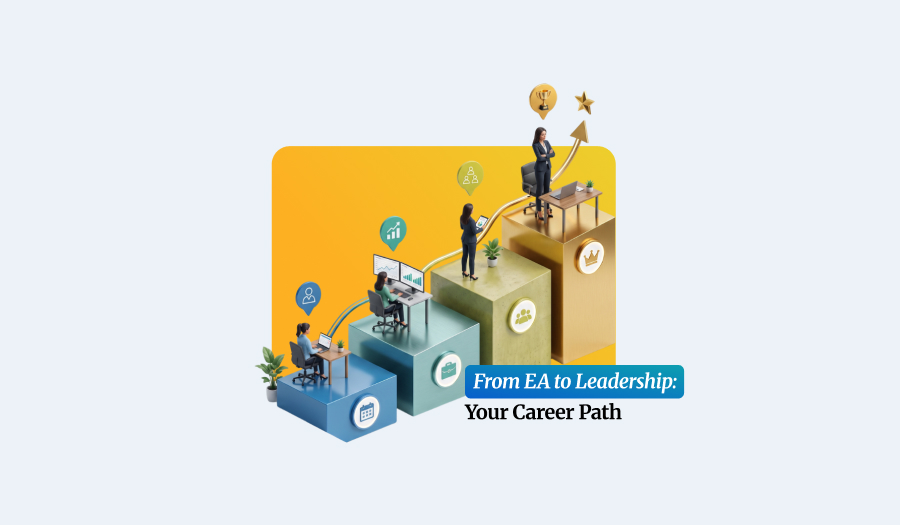
What the Career Path Actually Looks Like
Most EA careers progress through set stages, though timing sometimes varies based on your choices and circumstances.
Entry Level: 18-24 Months
You learn fundamental skills by using and mastering calendar apps, understanding executive preferences, building email and document systems, and learning how organizations actually work.
Entry-level roles support one or two executives with a salary ranging from $45,000-$65,000 annually. Many start from administrative assistant, customer service, or other roles.
The important aspect at this stage is demonstrating organizational capability and developing strategic thinking alongside practical execution.
Mid-Level: 2-5 Years
Mid-level EAs show a bit more independence and support multiple executives, lead projects, develop business acumen, and anticipate needs rather than just responding.
Compensation increases to $65,000-$100,000 annually, reflecting the level of skill required.
The biggest mistake you can make is staying in a role for longer than you should.
Once you've mastered the basics and developed strategic thinking, there’s no longer room for growth in this role. Consider moving when you're operating 20% beyond your title's expectations.
Senior Level: 5+ Years
Senior EAs own their executive's complete operational ecosystem, represent them to important stakeholders, and lead significant projects with organizational scope. Compensation reaches $100,000-$150,000 annually, with some senior EAs earning considerably more.
The defining feature is autonomy and influence. You make important decisions and shape how things work. Knowing whether you want this responsibility matters when deciding about advancement.
The Money Question
Salary progression matters, but you have to look at total compensation and understand that:
- Compensation shifts based on industry and geography
- Performance bonuses add 15 to 20 percent
- Benefits packages vary enormously
For example, a job paying $80,000 with unlimited remote flexibility and a $5,000 annual training budget might be more valuable than a $95,000 position with rigid hours. Negotiating compensation when entering new roles matters.
What Actually Separates Stuck EAs From Advancing Ones
The advancing EAs do these things consistently:
- Document impact: EAs track accomplishments and quantify results. This matters when advancement conversations happen.
- Build relationships intentionally: They develop genuine relationships across departments and outside their organization.
- Initiate career conversations: They ask explicitly what advancement requires and discuss goals regularly.
- Pursue strategic stretch assignments: They volunteer for projects that build new capabilities. They develop themselves rather than waiting for external investment.
- Stay current with technology: They understand emerging business tools and adapt to new platforms quickly.
Stuck EAs do the opposite. They focus purely on task execution without building strategic capabilities, stay in one role too long, avoid challenges, and wait passively for advancement.
Paths Beyond Traditional Executive Support
In every role, experience opens doors. Not every EA wants to stay in EA roles forever.
- Chief of Staff represents the most common transition for senior EAs seeking broader organizational scope. Compensation jumps to $120,000 to $180,000 annually.
- Operations Director roles suit EAs who love making systems work
- Project Management roles leverage your coordination and stakeholder skills
- Human Resources roles benefit from your understanding of organizational dynamics and ability to handle confidential information
Your EA experience holds a ton of transferable skills, such as strategic thinking, stakeholder management, project coordination, business acumen, and problem-solving.
Building Your Personal EA Brand
Your reputation is everything. Build an intentional brand by being reliable consistently. When you commit to something, deliver it. This matters more than being the smartest person in the room.
Most EAs try to be everything to everyone, which means they're nothing to anyone. Pick something you're actually good at or genuinely interested in. Maybe it's handling complex travel across multiple continents, managing board meetings, dealing with investor relations, or staying calm during genuine crises. Get known for doing that thing really well, as it pays more and opens better opportunities.
Go beyond your core job responsibilities. Volunteer for projects nobody wants, share observations about how things could work better, and write something about what you've learned. The goal here is to make yourself visible as someone who thinks beyond your job description.
Networking sounds corporate and fake, but it's just building genuine relationships with other people in your field.
- Go to conferences if your company will fund them
- Join professional groups
- Actually talk to other EAs, not just at work but online too
- Keep in touch with people you've worked with, even after you move on
These relationships become your safety net when you need advice, want to move jobs, or just need to vent about something ridiculous that happened at the office. The EAs who stay isolated end up stuck.
FAQs
- How long does it actually take to reach senior EA level? Progression typically takes 5-7 years from entry-level, though high performers in growth companies can advance in 3-4 years, while those in stable organizations with limited spots may take 7-10 years. The timeline is less dependent on time served than on demonstrated capability, strategic positioning, and organizational opportunity, since most of your trajectory remains under your control through how you develop yourself and manage career conversations with decision-makers.
- Can I build an EA career while working remotely? Absolutely, as remote EA roles are increasingly common with distributed leadership teams, and some executives actually prefer remote EAs because it forces clearer communication and documentation. The main disadvantage involves reduced casual relationship-building and limited access to organizational politics that inform decision-making, so if you're working remotely, compensate by intentionally building relationships, attending in-person company events when possible, and creating meaningful connection opportunities despite physical distance.
- What if I want to stay in EA roles long-term without becoming Chief of Staff? That's entirely legitimate, as many excellent EAs build fulfilling entire careers in executive support by deepening expertise rather than transitioning out, advancing through supporting more demanding executives, taking specialized EA functions, working in premium industries, or building fractional practices supporting multiple clients where senior EAs earn $120,000 to $150,000 annually while avoiding management responsibilities.
- What skills matter most for career advancement? Beyond being organized, develop strategic thinking, understand business fundamentals, become proficient with technology, and build credibility and influence without authority, all while cultivating genuine curiosity about the business you support, since EAs who advance quickly combine practical competence with intellectual engagement, thinking critically about why they're doing things and how to do them better.
- How do I know when I'm ready to move to my next role? There are multiple signs but a major one is going 20% above your current title's expectations, feeling bored despite strong performance, mastering current responsibilities without ongoing development, having peers and supervisors encourage bigger roles, and possessing clear vision with confidence in your capability, which together suggest you should initiate advancement conversations immediately rather than waiting for perfect readiness since real career movement happens at 75% certainty.
- Is burnout common in EA careers, and how do I prevent it? Burnout happens when you don’t set boundaries and let work consume your personal life, but it's preventable through intentional boundary setting, saying no to unreasonable requests, taking your vacation days, and working for executives who respect work-life balance. Warning signs like chronic exhaustion, role cynicism, declining performance, and work dread indicate that you should address them immediately through honest conversations or exploring different opportunities. The best EA positions offer autonomy to control your schedule and workload, since burnout typically signals misalignment between your boundaries and executive expectations, rather than the career being inherently unsustainable.
- What's the biggest mistake EAs make when managing their careers? The single biggest mistake is staying too long in roles after outgrowing them, leading to skill stagnation, compensation plateaus, diminishing motivation, and missed advancement windows, while other critical mistakes include not documenting achievements for advancement conversations, failing to build relationships beyond your immediate executive, avoiding stretch assignments, and being defensive about feedback rather than using it for growth since the most successful EAs treat career management as seriously as their daily work.
Your EA Career Starts Now
The EA career path offers meaningful work with genuine advancement, strong compensation growth, and multiple career directions depending on your interests and strengths.
Success requires combining excellent execution with strategic positioning, building authentic relationships, developing capabilities continuously, and managing your career proactively rather than simply waiting for opportunities to appear.
Sit down and assess where you are now and have a clear vision of where you want to go. That might mean deepening expertise in your current role, pursuing an assignment that builds new capabilities, intentionally building strategic relationships, developing specific skills, or initiating the career conversation you've been avoiding.
The EAs who thrive are the ones who manage their careers intentionally, who say yes to growth opportunities even when uncomfortable, and who communicate about their aspirations rather than assuming someone will notice.