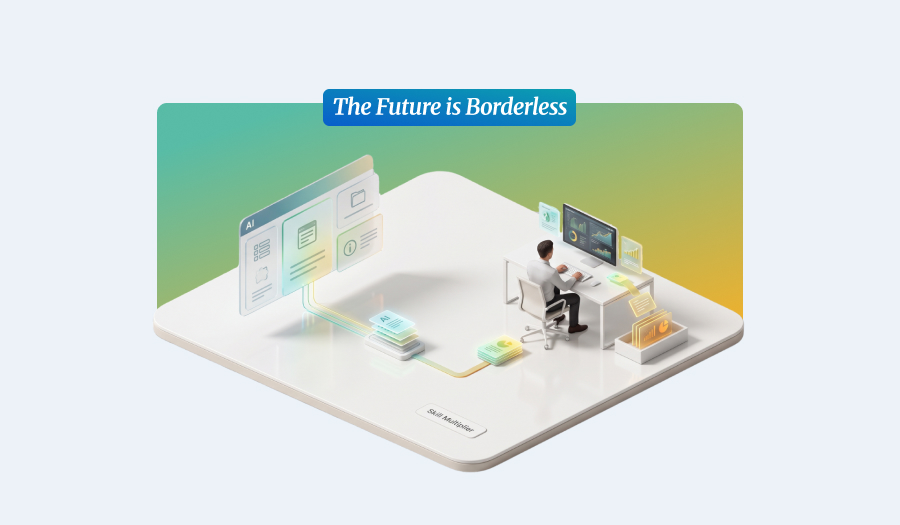
SMB Life Hacks: Upgrade Your Executive Assistant Job Duties for AI
Key Takeaways
- Traditional executive assistant roles are no longer enough to support a scaling business
- The biggest shift is from task execution to AI-powered system management
- Calendar ownership is the first step toward true operational leverage
- Modern assistants act as “AI pilots” who manage tools, workflows, and outputs
- Reinvesting saved time into revenue-driving tasks unlocks real growth
- Managed remote assistants eliminate the “management tax” of freelancers
The professionalization of executive assistant job duties has transformed the role from a temporary stop-gap into a technical destination. For decades, the cultural image of the support role was defined by the Devil Wears Prada apprenticeship trope — a grueling stepping stone where young talent endured high-pressure shadowing in exchange for a career break. Millennials entered the workforce expecting this model, only to find themselves frequently trapped under a hard administrative ceiling with no clear path to strategic skill upgrades. Today, the workforce has abandoned this "stepping stone" fantasy in favor of viewing the modern support role as a specialized, high-stakes career. This shift represents a move toward technical disciplines that require dedicated mastery and professional pride.
The modern small business owner often remains stuck in that legacy mindset, treating administrative support like a digital handyman who only fixes broken calendars. This reactive approach served as a useful shield in the early 2010s, but it functions as a structural bottleneck for any firm trying to scale in 2026. True operational freedom requires a move toward building strategic infrastructure rather than simply hiring help for the sake of temporary relief. Transitioning your assistant into a strategic role is the first major move toward building a venture that functions as a scalable asset and increasing your small business productivity. If you are still the one directing every minor task, you haven't bought your time back; you have simply hired yourself as a manager.
The Era of the Gatekeeper: Legacy Executive Assistant Job Duties (Post-2010)
The legacy mindset viewed the executive assistant as a reactive "shield" whose primary purpose was to keep the founder away from minor distractions. This model focused heavily on manual logistics and physical coordination, which ultimately kept the founder tethered to the daily grind. While this approach protected the executive's time, it did nothing to actually expand the business's strategic capacity. Breaking through this ceiling required recognizing that the "Gatekeeper" era had officially ended.
The Ceding of Control: From Permission to Calendar Autonomy
During the early stages of delegation, most founders fell into a "Permission Trap" where the assistant acted merely as a pair of hands. Every meeting request, travel booking, or schedule change required an explicit "yes" from the owner before any action was taken. This reactive cycle ensured that the business owner's brain remained tethered to the most minute administrative details of the day. Instead of gaining bandwidth, the founder effectively hired themselves as a full-time manager for their own help. This permission-based model created a high-friction environment that prevented any real strategic momentum from building.
The first major breakthrough in scaling occurred when the founder finally ceded total control over their calendar and itinerary to the assistant. Trusting an executive assistant to act as the "Coordinator of the Day" means they can accept, deny, or reorganize engagements without seeking prior approval. Executives were able to wake up and check a completed itinerary rather than spending your morning directing traffic in your own inboxes. This autonomy allowed the assistant to proactively manage the founder's energy and focus rather than just documenting your chaos. It was the psychological shift that transformed a helper into a true operational owner.
The Legacy Skill Set: Typing, Filing, and Coordination
The legacy skill set of the 2010s was largely defined by a focus on clerical speed and manual organization. Proficiency in static office software and a high words-per-minute typing count served as the primary filters for hiring administrative talent. While these "hard" skills were necessary for maintaining a basic level of order, they ultimately represented a technical ceiling for the scaling firm. This clerical focus often ensured that the assistant remained a helper rather than a strategic driver of growth. These roles were frequently restricted to the physical or digital paperwork that no longer defines a high-velocity business.
Beyond simple paperwork, the most effective executive assistants of the past were celebrated for their proactive problem-solving and deep emotional intelligence. These operators anticipated an executive’s needs well before they were articulated, often handling personal logistics like dinner reservations or convention tickets in the background. However, this heavy focus on "soft" intuition often reinforced a hard skills ceiling that trapped many talented Millennials in the role. By prioritizing personality and service over technical systems, executive assistants were rarely given the room to gain the high-leverage digital skills needed for executive advancement. This created a professional paradox where the more indispensable an assistant became at managing a founder's life, the less likely they were to be moved into strategic leadership.
The Scrappy Virtual Assistant Era and the Management Tax
While elite, high-context assistants provided immense value to corporate executives, their prohibitive costs often placed them entirely out of reach for the average micro-business owner. These small firms required foundational support for email management and basic meeting coordination, yet the high-level soft skills of a top-tier executive assistant were frequently overkill for a growing firm. The industry’s answer was the first stage of virtual assistant role evolution, which allowed founders to offload clerical volume without the six-figure overhead traditionally associated with executive support. This shift represented a significant attempt to democratize administrative help, although these early models often prioritized low cost over the managed precision of an enterprise-level operation.
The rise of unmanaged virtual assistants on gig marketplaces often promised a cheap way to offload administrative chores, yet these hires frequently lacked professionalized training or high-level technical literacy. This created a fragmented workflow where the quality of work remained inconsistent, forcing the founder to act as a constant supervisor. Founders quickly realized that this low-cost model carried a heavy management burden that effectively negated any potential savings. You spent more time fixing errors than gaining bandwidth, which is why unmanaged offshore hiring rarely scales for small firms. True leverage requires a specialist who can self-manage their own output without constant intervention. Reclaiming time required an operational shift away from the supervisor role to protect the founder's focus.
"Before the AI era, the 'Standard executive assistant' was a task-taker who increased your management load, while the 'Elite executive assistant' was a luxury asset whose high-context intuition served as an expensive shield rather than a scalable engine for your firm."
The Age of the AI Executive Assistant: Modernizing Executive Assistant Job Duties via Information Triage
Artificial intelligence has made basic office chores so cheap and easy that simply "getting things done" is no longer enough to save your time. The modern assistant's job is now to sort the signal from the noise, using software to handle the heavy lifting while they focus on the results. Instead of just checking off a to-do list, they manage the various tools and systems that actually execute your strategy. This change moves you out of the administrative weeds and allows you to focus on the high-level growth of your firm.
Reinvesting the Bandwidth: From Clerical Volume to Digital Presence
The shift into the AI era has not deleted the traditional duties of an assistant, but it has dramatically changed the technical "how" behind them. Previously, a utility assistant spent the majority of their week on the manual effort of drafting emails, formatting reports, and chasing people down for meeting times. These foundational tasks are still required for the business to function, but they are now executed through automated systems that handle the initial heavy lifting. As part of this virtual assistant role evolution, the executive assistant’s role has transitioned from a manual producer of documents to a technical supervisor who monitors the quality of the digital output. This evolution ensures that the speed of the software is always tempered by the context and intuition of a human operator.
A massive reclamation of time has allowed the modern assistant to take on strategic responsibilities like social media management and personal branding. In the past, a busy founder had to handle their own LinkedIn presence or hire an expensive agency to stay relevant in the market. Now, the surplus bandwidth created by AI allows the assistant to act as a "Voice Proxy" who maintains the company’s public-facing narrative. They manage the content, respond to comments, and ensure the brand stays top-of-mind without the founder needing to touch a keyboard. Reinvested energy is what transforms the role from an internal support cost into an external driver of business growth.
The Pilot’s Stack: Scaling Active Revenue with Agentic AI
The arrival of AI has expanded the assistant's territory into specialized areas that were previously reserved for expensive outside consultants or specialized agencies. Modern assistants now act as technical researchers who can perform deep competitor analysis or scrape high-intent lead lists in a fraction of the time it once took a whole department. They use these tools to repurpose a single piece of your content—like a video or a podcast—into dozens of social posts, effectively acting as a mini-marketing agency for your brand. This shift moves the role from "administrative support" into "active revenue support," helping the founder find new growth opportunities rather than just managing old ones. By controlling these advanced digital tools, the assistant provides a strategic edge that was physically impossible for a manual worker to achieve.
For the more AI-savvy executive assistants, there is an opportunity to completely transform their role beyond the surface-level use of AI. The technical pilot role requires a mastery of "agentic AI" management, where the assistant builds and monitors digital tools that perform multi-step actions on behalf of the firm. Instead of performing one-off tasks, the assistant creates prompt libraries and automation sequences that act as a technical engine for your daily operations. This allows the business to scale its output without requiring the founder to manage every individual software connection or technical trigger. By overseeing these digital agents, the assistant provides a level of operational leverage that was previously reserved for large-scale IT departments. This ensures the digital machine runs at peak efficiency, turning raw software potential into a reliable business asset.
The Human Guardrail: Intellectual Rigor and Risk Management
Since current AI is far from true artificial general intelligence, the modern assistant cannot outsource the fundamental thinking and problem-solving required for high-stakes decisions. They must act as the primary brain of the operation, using critical thinking to verify that the software's logic aligns with your actual business goals. This role involves maintaining strict data hygiene within your CRM and other databases to ensure that AI-driven insights are based on clean, accurate records. Without this human oversight, the technology is prone to corrupting your business intelligence with messy data and flawed reasoning. By owning the thinking process, the assistant ensures the business remains a product of human strategy rather than automated guesswork.
The risk of over-reliance on AI extends beyond simple hallucinations and into the danger of total business data corruption or the loss of customer trust. If an assistant lets an unmonitored chatbot or automated email system handle high-value clients, the lack of human nuance can lead to a measurable drop in brand loyalty and revenue. These systems can also inadvertently "poison" your internal databases by entering false information that complicates future sales and marketing efforts. Vigilance is required to prevent these technical failure modes from becoming a permanent drag on your firm’s reputation and bottom line. Maintaining a human-in-the-loop is the only way to safeguard your strategic assets from the unpredictable errors of an automated stack.
The AI Premium: Investing in an AI Executive Assistant as a Growth Driver
Upgrading an executive assistant from a simple support function to a primary operational engine for growth provides a massive competitive advantage, but it also creates a significant financial barrier in the domestic market. As established, the technical skills required to act as a "Voice Proxy" or a "Lead Scraper" command a significant $18,000 (28%) salary premium in the United States. For most microbusinesses, this economic reality makes high-level local support nearly impossible to fit into a lean budget, effectively gating the most valuable talent behind a high-cost domestic wall. This creates a strategic plateau where you cannot afford the very support you need to reach the next level of revenue.
To bypass this cost barrier, founders are turning toward the global virtual assistant market, where professional remote specialists are just as technically proficient—and often more digital-first—than their local counterparts. These global pilots offer the same enterprise-level execution at a fraction of the domestic cost, allowing your firm to scale its operations without the traditional "Growth Tax." However, hiring a solo freelancer abroad often creates a "management tax" that turns the founder into a full-time supervisor, canceling out any time savings. AbroadWorks bridges this gap by providing remote executive assistant management through AI-literate specialists who drive your growth and maintain your systems without the administrative burden. Reclaiming your strategic bandwidth requires a managed approach that eliminates the friction of daily supervisor oversight.
"The modern assistant has moved beyond the inbox to become a technical pilot who scales your personal brand and hunts for revenue while you stay focused on high-level strategy."
The Digital Architect: Scaling Small Business Productivity and Operational Persistence
Looking toward the 2026 horizon and beyond, the final evolution of the support role moves away from active daily piloting and into the territory of permanent system architecture. This future stage focuses on building "Operational Persistence", the ability for a business to maintain its momentum and quality even when the founder is entirely offline. By creating this layer of automated resilience, the assistant secures the strategic freedom you need to focus on long-term growth rather than daily maintenance. This shift represents the final transition from managing a human helper to owning a scalable business asset that functions independently of your personal willpower.
Digital Architecture and the "Unconsciously Disciplined" State
The executive assistant’s transition into a "Digital Architect" involves managing automated workflows and AI agents rather than performing manual tasks. These architects build the systems that work around the clock to ensure the business never stops moving. This allows the business owner to focus on architecture while the assistant owns the operational execution. It is the ultimate expression of strategic leverage for a scaling firm. This shift ensures the business engine runs on software logic rather than founder willpower.
Achieving this state requires reaching what research calls the Unconsciously Disciplined phase of operation. In this stage, your assistant ensures that every SOP persists and improves without needing your direct supervision. The business becomes a scalable asset that preserves its own institutional knowledge regardless of the founder's daily focus. This persistence is the only way to build a venture that outlives your personal memory. It is the mechanism that "ghost-proofs" your company from the chaos of human turnover.
From Operational Owner to Strategic Partner: Remote Executive Assistant Management
As the assistant takes ownership of the technical stack and the persistence of company SOPs, their role naturally expands into project oversight and team coordination. They stop asking for a to-do list and start providing progress reports on the initiatives they are driving on your behalf. At this level of maturity, the specialist is no longer just "assisting" an executive; they are managing the operational weight of the business to ensure your vision is executed. They act as the primary bridge between your high-level strategy and the team’s tactical output, protecting your focus by resolving friction before it ever reaches your desk.
In the world of microbusinesses, this high-context partnership is effectively the transition from an executive assistant to a Chief of Staff. While a traditional executive assistant protects your time, a Chief of Staff owns the business outcomes, providing a dedicated "Office of the CEO" that functions as your operational surrogate. As these executive assistant job duties expand, the title naturally evolves toward a strategic management function. This evolution is the ultimate life hack for a founder who wants to step back from the daily grind without risking a revenue collapse. It transforms the support role into a strategic partnership that allows the business to scale with the precision of a much larger organization.
Managed Stability vs. The Marketplace Gamble
The reliability of a managed specialist model stands in direct contrast to the high turnover and risk of unmanaged virtual assistant marketplaces. A solo freelancer answers only to themselves, which often leads to ghosting or inconsistent quality when things get difficult. A managed model provides a layer of accountability that ensures your business knowledge is never lost to turnover. It provides the difference between a temporary fix and permanent infrastructure. This accountability is the only way to build a department that scales with your revenue.
The AbroadWorks advantage provides flexible, pre-vetted, and continuously upskilled talent that scales in lockstep with your business. You get a dedicated virtual assistant who is part of a managed system, ensuring that your data hygiene and process persistence are maintained at a professional level. This removes the training and management burden from your plate entirely. It is the ultimate life hack for a founder who needs to build a scalable company without the overhead of a large HR department. You get the stability of an agency with the dedicated focus of an in-house hire.
"A business is only a scalable asset when it functions with surgical precision while the founder is offline. Graduation from the 'hustle' requires a managed specialist who owns the technical execution so you can own the growth."
Frequently Asked Questions (FAQ)
- Will an AI executive assistant transition into a Chief of Staff role? In a microbusiness (1-10 employees), these roles often converge into a single "Operational Owner." While a Chief of Staff usually focuses on high-level strategy, a technical executive assistant provides the execution bridge that makes that strategy possible through automation.
- If my virtual assistant is using AI, am I just paying for a human to push buttons? Founders often worry that an AI-literate assistant is just a redundant middleman between them and the software, but the reality is that AI requires more human oversight, not less. While a bot can generate a thousand emails, it cannot understand the nuance of your specific client relationships or the strategic intent behind a negotiation. You aren't paying for the automated output; you are paying for the critical thinking and "Decision Dossiers" that keep your business from hallucinating. A specialist ensures that the technology serves your brand rather than becoming a digital liability that alienates your customers.
- How do I actually trust a remote virtual assistant with my company’s sensitive data? The fear of "ghosting" or data theft is the primary reason founders stay tethered to the high-churn domestic market, but these risks are actually higher with unmanaged local hires. A solo freelancer on a gig marketplace answers only to themselves, which often leads to inconsistent quality and sudden disappearance when a better offer arrives. The AbroadWorks managed model provides a layer of institutional accountability that ensures your business knowledge is documented and preserved regardless of an individual's status. We provide the security protocols and professional oversight that transform a "remote worker" into a stable, operational department.
Conclusion: Reclaiming Small Business Productivity through Modern Executive Assistant Job Duties
The evolution from a generalist gatekeeper to a strategic architect is a mandatory requirement for any founder who wants to break through the manual hustle. Continuing to treat your assistant as a simple clerk is a strategic failure that keeps your business tethered to your personal physical limits. By upgrading your executive assistant job duties to include AI piloting and technical orchestration, you stop the revenue hemorrhage caused by administrative drag. Reclaiming your strategic bandwidth is not a matter of working harder; it is a matter of hiring the execution required to make your systems work for you. Partner with AbroadWorks today to find the AI-literate specialist who will turn your vision into a scalable, investor-grade asset.